Editorial Board
MusicWeb International
Founding Editor Rob Barnett Editor in Chief
John Quinn Contributing Editor Ralph Moore Webmaster
David Barker Postmaster
Jonathan Woolf MusicWeb Founder Len Mullenger
MAY 2009 - DOWNLOAD ROUNDUP Download of
the Month Joseph HAYDN(1732-1809)
: Missa in angustiis (‘Nelson’ Mass); Te Deum
in C
Felicity Lott (soprano); Carolyn Watkinson (alto); Maldwyn Davies
(tenor); David Wilson-Johnson (baritoneThe English Concert and
Choir/Trevor Pinnock DG Archiv 423 097-2 [50’] – from passionato.com
(320k mp3)
This recording has been around so long and praised
so highly that, at this late date, there’s little to add except
to make a very strong recommendation and to say that the download
is very little, if any, inferior to the CD. The ‘Nelson’ Mass
is, perhaps, the marginally weak link in the Chandos/Hickox set
of the Haydn Masses, so this version makes an excellent supplement
to that set. This is still one of the highlights of the Haydn
discography; if you buy only one Haydn recording in this, his
anniversary year, make this it, on CD or download – unless, of
course, you already own it.
Joint Download of the Month Jacobus Vaet (c.1529-1567) : Missa
Ego flos campi; Antevenis virides; Ecce apparebit
Dominus; Magnificat octavi toni, etc. Jacob Clemens non Papa
(c.1510-c1555) : Ego flos campi
Cinquecento Renaissance Vokal Hyperion CDA67733 [75:21] – from iTunes (256k mp3)
I thought this
new Hyperion recording so good that I’ve reviewed it in some detail
on the main Musicweb pages – please follow the link to that review.
The cover-art and booklet, with texts and translations may be
accessed from the Hyperion web-site as a pdf document for printing.
Highly recommended George Frideric HANDEL(1685-1759)
: Jephtha
Nigel Robson, Lynne Dawson, Anne Sofie von Otter, Michael Chance,
Stephen Varcoe, Ruth Holton; The Monteverdi Choir; English Baroque
Soloists/John Eliot Gardiner Philips 422 351 2 [3 CDs] – from passionato.com
(320k mp3)
When reviewing the recent Carus recording of this oratorio,
directed by Matthias Grünert (83.422), I found myself wondering
why I wasn’t reacting more positively to a performance with everything
in place - except the heavily accented English pronunciation -
which nevertheless just didn’t gel. I found the answer in this
download – apparently the only way currently to obtain Gardiner’s
splendid live performance of this one work, otherwise available
in a 9-CD set. Here you’ll find all the ingredients that are
lacking in the Carus performance; it ‘sold’ me a work that I had
not rated among Handel’s best. The 320k transfer is good; it’s
quite a bargain, too, at £15.99.
Discovery of the Month Dialogues with Heaven Chiara Margarita COZZOLANI (1602-c.1678)
: Motets from Concerti sacri (1642) and Salmi a
otto concertati (1650)
Musica Secreta Linn
CKD113 – from linnrecords.com
(mp3 or lossless)
Beautiful music by a female composer of whom I’d never even heard,
superbly sung and very well recorded, with a fine lossless transfer.
This has to be my Discovery of the Month; waste no time
in obtaining it if you’re looking for one of those ideal recordings
to unwind to.
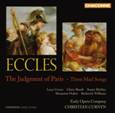
Highly recommended John ECCLES(c.1668-1735) The Judgment of Paris (1701);
Three Mad Songs (1704)
Roderick Williams (baritone); Benjamin Hullett (tenor); Susan
Bickley (mezzo); Claire Booth (soprano); Lucy Crowe (soprano);
Chorus of Early Opera Company; Early Opera Company/Christian Curnyn
Chandos Chaconne CHAN0759 [62:14] – from theclassicalshop.net
(320k mp3 or lossless)
This has to be
a close runner-up to the Cozzolani recording as Discovery of the
Month. I would have preferred to have had the Mad Songs first
– they’re something of an anti-climax after the major work. Otherwise,
strongly recommended; it’s Chandos’s worthy Recording of the Month
and I think it will be in my player frequently. It neatly supplements
Chados’s excellent recent version of Dido and Æneas; Eccles
may not be in Purcell’s class but his music is very attractive
and it’s good to see Purcell placed in context with his contemporaries.
The lossless (wav) download is first class.
La Quinta Essentia Orlando Lassus:
Missa ‘Tous les regretz’; ThomasAshewell: Missa ‘Ave Maria’;
GiovanniPalestrina:
Missa Ut re mi fa sol la
Huelgas Ensemble/Paul van Nevel Harmonia Mundi HMC90 1922 [77:10] – 13 tracks from eMusic.com
(variable bit-rate mp3).
Orlandus LASSUS (1532-1594):
Missa Osculetur me; Hodie completi sunt; Timor et tremor; Alma
redemptoris mater; Salve regina; Ave regina cælorum; Regina cæli
The Tallis Scholars/Peter Phillips Gimell CDGIM018 [48:39] – from Gimell
(mp3 or lossless).
Two
excellent recordings of music by Lassus, from both of which I
derived great pleasure. The Harmonia Mundi coupling with Ashewell
is particularly attractive and neatly complements – indeed, surpasses
– the Christ Church recording of the latter’s music which I recently
recommended. Listening again to music by the man who may have
been Taverner’s teacher and predecessor at Cardinal College, I
think I judged him a little harshly when I referred
to his music as workaday; in fact, this mass stands comparison
with those first-rate early Tudor composers who were his successors.
The all-Lassus Gimell recording contains excellent performances
of the calibre which the very name of the Tallis Scholars practically
guarantees. My only reservation is that this CD now offers short
value and could benefit from the kind of reissue with extra music
that Gimell have been giving to some of their other early recordings.
The Harmonia Mundi recording is much more generous in terms of
time.
The mp3 eMusic download is more than acceptable; the lossless
(wma) version of the Gimell is splendid.
No notes with the eMusic download; full documentation to print
out with the Gimell.
Orlando GIBBONS (1583-1625) :
Consorts for Viols Fantasias a 6 i-vi; In Nomine a 5 i-ii; Peascod Time (The Hunt’s
Up); Pavan Lord Salisbury; Fantasia; The Silver Swan; Fantasies
a 3 i-iv; O Lord, in thy wrath rebuke me not; Hosanna to the Son
of David; Pavan; Galliard; Go from my Window
Phantasm (viol consort) AVIE AV0032 [71:48] – from passionato.com
(320k mp3 or flac lossless).
There’s very
little of value that I can add to the praise which has been heaped
on this award-winning recording, so I refer you to Johan van Veen’s
comprehensive review
and merely add that the passionato download is excellent in both
formats. At the moment passionato have only a small selection
from the excellent Avie catalogue; I very much hope that they
will be adding more soon. They could do much worse than to include
Phantasm’s other Avie recordings.
Marc-Antoine CHARPENTIER(1643-1707)
: Le Jugement de Salomon (The Judgement of Solomon); Motet
pour une longue offrande
Les Arts Florissants/William Christie Virgin Classics 3 59294-2 – from passionato.com
(320k mp3 and flac lossless).
André CAMPRA(1660-1744)
: Grands Motets – Notus in Judea Deus; De Profundis;
Exaudiat te Dominus
Les Arts Florissants/William Christie Virgin Classics 5 45618 2 – from passionato.com
(320k mp3 and flac lossless)
As with The Tallis Scholars, the mere
name of Les Arts Florissants is almost a guarantee of quality
and so it proves here on these two recordings of French baroque
music. These are first-rate accounts of very attractive music.
Charpentier is the better-known of these composers but the Campra
is also well worth investigating. Both recordings are very good
but, sadly, the Campra is marred by a disfiguring dropout on track
2. Buying that track elsewhere won’t help – the iTunes version
has the identical fault which must, therefore, presumably be laid
at the door of EMI/Virgin. Both providers refunded my money,
but you might like to come back to this one in a few months when,
with any luck, the fault will have been repaired.
MONTEVERDI, FRESCOBALDI,
etc: Un Concert pour Mazarin
Philippe Jaroussky (counter-tenor); Ensemble la Fenice/Jean Tubéry
Virgin Classics 5 45656 2 – from passionato.com
(320k mp3 and flac lossless)
I have to say that Philippe Jaroussky’s voice is a taste which
I haven’t yet acquired; very different from other counter-tenors.
Try the sample tracks before you buy; if you like what you hear,
this recording offers a very attractive programme of works by
Italian composers whose music Cardinal Mazarin, himself Italian,
enjoyed. The 320k sound is more than acceptable and there’s also
a lossless (flac) version.
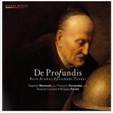
De Profundis: Cantatas by Nikolaus
BRUHNS, Dietrich BECKER, Franz
TUNDER, Dietrich BUXTEHUDE
and Johann Christoph BACH
Stephan Macleod (bass); Ricercar Consort/Philippe Pierlot Mirare MIR041 [66:01] – from eMusic.com
(8 tracks, variable bit-rate mp3)
Eight cantatas for bass soloist, the
first and last in penitential mood, may look like a recipe for
boredom, but the music here is varied and the cantatas become
more accomplished as the recording progresses, until we’re left
with two minor masterpieces by Buxtehude, a beautiful setting
of words from the Song of Songs, and Johann Christoph Bach’s Lament
‘Wie bist du denn O Gott?’. It’s a bit naughty of Mirare
to bill the latter simply as ‘Bach’ on the cover; he’s often referred
to as the finest of JSB’s predecessors, but he isn’t the Bach
whom most impulse purchasers will think of. The performances
are excellent and the recording is good, if a little close. The
eMusic mp3 transfer is more than acceptable. No texts or notes,
but the words of De Profundis and the excerpts from the
Lutheran Bible are easily found online.
George Frideric HANDEL
(1685-1789) : Organ Concertos, Op4/2, Op.7/3-5, No.13
‘Cuckoo and Nightingale’
Simon Preston; The English Concert/Trevor Pinnock DG Archiv Masters 447 300-2 [66:31] - from passionato.com
(320k mp3)
If you followed my advice and bought
Ton Koopman’s super-budget-price version of Handel’s Op.4 and
Op.7 Organ Concertos – see the end of my review
of the Op.3 Concerti Grossi – you may be looking around
for a version of Concerto No.13, the beautiful ‘Cuckoo and Nightingale’,
to round off the set. Look no further than this Archiv download
from passionato.com in very good mp3 sound. This is one of those
instances where downloading saves the day, since this recording
is available in the UK only as an import; otherwise Preston’s
excellent versions of these life-enhancing Handel concertos may
be had only as part of a 3-CD set.
Passionato can also offer the new Decca recording of Handel’s
Op.4 Organ Concertos (478
1465, Ottavio Dantone/Accademia Bizantina) which I haven’t
yet heard, but intend to try.
John MARSH(1752-1828) : Symphonies Nos. 2, 6, 7, 8
and Conversation Symphony for two orchestras
London Mozart Players/Matthias Bamert CHANDOS CHAN10458 [64:05] - from theclassicalshop.net
(mp3 and lossless).
The Olympia CD
of five symphonies by this contemporary of Haydn and Mozart (OCD400)
has recently been reissued by Alto – happily, that super-budget
CD overlaps with the Chandos recording only partly, with the Sixth
Symphony and Conversation Symphony in common. The Chichester
Concert/Ian Graham-Jones play very well on that earlier recording;
though they’re not, of course, as professional a group as the London
Mozart Players, their performances are a little more forthright
than the LMP’s, though in the two works common to both recordings
Bamert’s timings are slightly faster than those of Graham-Jones.
The Chandos recording is first-rate and the lossless transfer reflects
that fact.
The same Contemporaries of Mozart series offers two other
very recommendable recent recordings: Leopold
Mozart Symphonies on CHAN 10496 and Georg
Joseph Vogler Symphonies, Overtures and Ballets
on CHAN 10504. Both contain premiere recordings and both
are performed by the London Mozart Players and Matthias Bamert.
Franz SCHUBERT (1797-1828) :
Symphonies Nos. 3, 5 and 6
Royal Philharmonic Orchestra/Sir Thomas Beecham EMI GROC 5 66984-2 [78’ ADD] – from passionato.com
(320k mp3 or lossless flac)
This is another back-catalogue item which
has never been surpassed and probably never will be – and the
reproduction of the original sleeve, with Beecham wearing that
awful suit is really nostalgia-inducing. The recording is a
little dated now but passionato’s transfer does it full justice.
Beecham always had the knack of making anything that he put
his hand to sound great; here he makes these early symphonies
sound like masterpieces, with the ‘little’ C major (No.6) almost
sounding the equal of the ‘great’ symphony in the same key (No.9
or No.7 depending on whether you follow the English or German
numbering). The mp3 is good value at £7.99 but the flac version
at £9.99 is less so, when the parent CD can be obtained for
less. Like most other download providers, passionato need to
look seriously at their policy of charging the same inflexible
price for full- medium- and budget-price issues.
Johannes BRAHMS (1833-97) :
Symphonies Nos.1-4; ‘Haydn’ Variations; Alto Rhapsody1;
Academic Festival Overture; Tragic Overture 1Christa Ludwig; Philharmonia Orchestra/Otto Klemperer
EMI Great Recordings of the Century 5 62742 2 [3CDs] – from
amazon.co.uk (256k mp3)
This could so easily
have become not just Bargain of the Month but the Bargain of Bargains
– 3 CDs’ worth of Klemperer’s sure touch in Brahms for just £3.
Surprisingly, Amazon also have precisely the same 3-disc set as
a download for more than six times the price. Unfortunately there
is a flaw: a sizeable and disfiguring dropout in the first track
of the first CD, the theme of the ‘Haydn’ Variations.
Amazon very quickly and very courteously acknowledged my email
about this and refunded my payment in full. For the moment the
£3 album appears to have been withdrawn from the amazon site.
It may well be that they are able to rectify the problem in the
near future, in which case the recording will be restored for
sale.
Purchasing that one track from another provider won’t help – I
tried passionato’s version and found the same flaw, presumably
emanating from the master copy provided by EMI. I have no reason
to think that the more expensive amazon version is exempt.
In my recent review
of Eloquence’s very inexpensive 4-CD set of the Brahms Symphonies,
Overtures, Alto Rhapsody and German Requiem
(OSR/Ansermet, 480 0448) I regularly found myself comparing Ansermet’s
mostly very acceptable performances with those of Klemperer and
preferring the latter.
Ansermet’s Decca recordings were always preferable to Klemperer’s
Columbia versions and that remains the case – Ansermet sometimes
sounds a little shrill, Klemperer a little more – but amazon’s
256k transfers are very acceptable – at least better than the
original LPs – and the performances fit the music like a glove,
especially in the case of the third and fourth symphonies, which
I have yet to hear bettered.
Johannes BRAHMS:Piano Quartets 1-3
The Borodin Trio with Rivka Golani (viola) ChandosCHAN8809/10 (2 CDs) – from theclassicalshop.net
(mp3 or lossless)
I recently recommended
the Nash Ensemble’s recording of the first and third quartets,
both very attractive works, but you really need the symphonic-length
second to complete the series and this Chandos recording fits
the bill. Tempi are on the broad side by comparison with the
Nash players in the first and third quartets and by a considerable
margin by comparison with the Ames Piano Quartet on Dorian in
the second. In any case, the eMusic download of the Dorian version
apparently has a track defect in the slow movement – at least,
a comment posted to that effect by a customer has been allowed
to stand, so I presume that the fault hasn’t been corrected.
The Borodin Trio/Golani tempi did not worry me at all – they give
the music its due weight, an essential feature with Brahms, even
at his most light-hearted, as here in the gipsy finale of the
first quartet – nor did the supposedly Slavic tinge which some
reviewers have found in these performances. I listened to this
version of the second quartet immediately after hearing a Radio
3 midday concert in which the work was performed by Llyr Williams
and the Leopold String Trio, a performance which had reminded
me what a wonderful, often magical, work this quartet is and which
set me looking for a download version to recommend. For my money,
the Chandos set offers just that – a performance which gives the
music a chance to breathe.
Both eMusic and classicsonline can offer mp3 versions of these
Chandos recordings but only Chandos’s own theclassicalshop has
them in lossless (wma, wav or aiff) format, in which form the
recordings sound excellent. The broad tempi bring one small problem
– the first and third quartets are too long to accommodate on
one CD, as is the usual practice, so you have to change discs
for the finale of the third.
The main rivals among complete sets, the augmented Beaux Arts
Trio, offer rather brisker performances, especially of the second
quartet, for those who prefer their Brahms a little less weighty,
at £9.99 for the 2-disc set from Universal’s classicsandjazz.co.uk
website (454 017 2, mp3 or wma). From the same site, the Takács
Quartet even manage to include the Piano Quintet, presumably by
omitting several repeats, but at £14.99 this 2-disc set is not
competitive with its own CD equivalent, especially when Amazon.co.uk
offer the same set to download for a more competitive £9.79.
Johannes BRAHMSEin deutsches
Requiem (German Requiem)
Julia Brochert (soprano); Michael Volle (baritone); Kammerchor
Stuttgart; Klassische Phlharmonie Stuttgart/Frieder Bernius CARUS 83.200 – from classicsonline.com
(320k mp3)
Dorothea Röschmann, Thomas Quasthoff; Berlin Radio Chorus; Berlin
Philharmonic Orchestra/Sir Simon Rattle EMI 3 65393 2 – from amazon.co.uk
or passionato.com
or iTunes.
Following my recent
comparative disappointment in reviewing the 4-CD Eloquence set
of Brahms referred to above, I decided to look at some of the
download versions of the German Requiem. I used to think
that I didn’t really warm to the work, but the problem really
is that no one version has ever satisfied me; I like the quiet
introspection of one version and the power of another, but the
two never seem to come ideally together. Combine the qualities
of these two versions and you’d have a real winner.
I’ve seen the Bernius version chosen as the best of the
current recordings. I wouldn’t go that far, but it contains some
fine singing and a sensitive approach to the music. It would
be ideal for those seeking a thoughtful and consolatory account,
but it doesn’t quite catch fire enough for me at those crucial
moments, like the climaxes of Denn alles Fleisch es ist wie
Gras, where some interpretations really take off. Nor does
the live recording quite make the impact that it should; if one
heard this as a Radio 3 broadcast, one might be well enough pleased,
but I’d like a little more bite from a commercial recording.
I don’t think that classicsonline’s 320k transfer is to blame,
since their mp3s usually sound more than adequate. Rattle, inDenn alles
Fleisch,actually takes slightly longer than Bernius
(14:14 as against 13:07); as you might expect, therefore, his
version has greater weight but it also makes a more powerful impact
at the big moments. If you can bear the intrusive advertising
at the beginning of each track, this version is free to stream
from We7, or it can be downloaded from them, free of ads, for
£6.75. Overall, I agree with Jonathan Woolf, who thought this
version powerful and intense, but felt that Quasthoff’s singing
let the side down somewhat – see review.
Nevertheless, it’s probably the best recent version to have, but
next month I want to look again at the classic Klemperer
account.
Anton Stephanovich ARENSKY(1861-1906):Piano Trio in d minor, Op.32 Nicolai Andreyevich RIMSKY-KORSAKOV (1844-1908):Quintet for piano and winds in B-flat (1876)
The Nash Ensemble CRD CRD3409 [62:21] – 7 tracks from eMusic.
The Arensky is a most attractive work, little short of being worthy
of comparison with Tchaikovsky’s Piano Trio, with which it’s coupled
on a Naxos recording, available to download from classicsonline
(Vovka Ashkenazy, etc., 8.550467). Accomplished as the Nash Ensemble
performance is, with its emphasis on the lyrical qualities of
the music, I marginally prefer the more energetic Naxos version.
The Rimsky Quintet is also very attractive music and I have no
complaints about the performance. The recording is clear, if
a trifle recessed and slightly lacking in body – perhaps it needs
to be transferred at a higher bit-rate than eMusic’s, with some
tracks at below the magic 192kbps. Boosting the playback volume
helps matters. If you prefer the Arensky coupled with the same
composer’s second Piano Trio, try the Borodin Trio on Chandos
CHAN10184X from theclassicalshop.
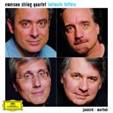
Leos Janáček(1854-1928)String Quartets No.1 (Kreutzer
Sonata) and 2 (Intimate Letters); Bohuslav
Martinů (1890-1959)Three Madrigals for Violin
and Viola, H313
Emerson String Quartet DG 477 8093 – from passionato.com
(320k mp3)
This new recording
has a fair claim to be the best current version of the Janáček
quartets and the Martinů coupling adds to its attractiveness,
especially as the fiftieth anniversary of the death of its composer
is in danger of being eclipsed by the four luminaries who are
being celebrated this year. The performances integrate the power
of the music with beautiful playing. I never found the result
too smooth, though some may prefer the music to have slightly
rougher edges. With excellent recording, transferred in very
acceptable mp3 sound, this is strongly recommended.
If you’re looking for more Martinů chamber music, try the
Panocha Quartet’s complete Supraphon 3-CD set, available from
eMusic.
Miklós Rózsa (1907-1995):
Violin Concerto; Hungarian Serenade
Gilad Karni (violin); Budapest Concert Orchestra/Mariusz Smolij
Naxos 8.570925 [60:41] – from classicsonline.com
(320k mp3 with pdf booklet, or passionato.com,
320k mp3 or lossless flac.)
If you want to
hear what Rózsa’s music sounded like pre-Hollywood, you could
do much worse than this recording – see Steve Arloff’s review.
The rival Chandos recording to which he refers is available from
theclassicalshop.net. passionato’s mp3 version is marginally
less expensive than that from classicsonline; the flac version
offers potentially better sound but at little, if any, saving
over the CD.
Frank Bridge (1879-1941) : Phantasie
Trio in C minor (Piano Trio No.1) (1907); Piano Trio No.2
(1928-29); Nine Miniatures for Piano Trio (1908)
Jack Liebeck (violin); Alexander Chaushian (cello); Ashley Wass
(piano) NAXOS 8.570792 [72:57] – from passionato.com
(320k mp3 or lossless flac)
John France’s generally
positive review
says just about all that I want to say about this recording, except
to endorse his comment that the second piano trio is not the best
work by which to get to know Bridge and to add that the lossless
flac download from passionato does the recording full justice,
albeit at a price commensurate with that of the physical CD.
The mp3 version, at 320kbps will be most downloaders’ choice for
over a pound less. No notes but, as with all Naxos recordings,
these can be cut and pasted from Naxos’s website.
Joaquín RODRIGO(1901-99) : Concierto de Aranjuez; Fantasía
para un gentilhombre; Cançoneta for violin and orchestra; Invocacion
y danza; Tres pequeñas piezas
Pepe Romero (guitar); Agustin Leon Ara (violin); The Academy
of St Martin in the Fields/Neville Marriner Decca Originals 475 8248 [63:15] – from passionato.com
(320k mp3)
The recent EMI 2-CD reissue of Rodrigo concertos (2 37681 2),
recommendable as it is, doesn’t contain the Fantasía para un
gentilhombre which, for me, is a close runner-up to the Aranjuez
concerto. This inexpensive download in very acceptable mp3 sound
will put matters right and give you another very fine version
of Aranjuez, plus Agustin Ara’s performance of the short
Cançoneta and two other worthwhile works. Strongly recommended.
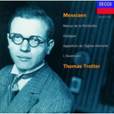
Olivier MESSIAEN
(1908-92) : Messe de la Pentecôte; Diptyque;
Apparition de l’Eglise éternelle; L’Ascension
Thomas Trotter (organ of L’Eglise-Collégiale Saint-Pierre de Douai,
France) Decca 436 400-2 [75’] – from passionato.com
(320k mp3)
I used this recording
recently as my benchmark comparison for Delphian’s fourth and
final volume in their complete series of Messiaen’s organ works
(DCD34078, 2 CDs), since it contains almost exactly the same works
as CD2 of that set. Good as is Timothy Byram-Wigfield’s playing
there, I found these Decca performances superior in almost every
respect. The Windsor organ on Delphian suits the music well;
the Douai organ here fits it like a glove. Very acceptable 320k
mp3 sound.
Spirit of Brazil
Music by Clarice ASSAD, including
premiere recording of Danças Nativas, Egberto
GISMONTI, Sérgio ASSAD, Roland DYENS, Paulo BELLINATI and
Heitor VILLA-LOBOS: Ária
from Bachianas Brasileiras No.5; Brincadeira from
String Quartet No.1.
Aquarelle String Quartet CHANDOS CHAN10512 [58:44] – from theclassicalshop.net
(mp3 and lossless)
If Julian Bream
and John Williams are twice as good on their Together and
Together Again albums (2 CDs, RCA 74321 201342),
does that make a guitar quartet four times as good? Not necessarily,
although, on the evidence of this recording, the Aquarelle String
Quartet are an accomplished and entertaining group. The music,
all but two tracks by contemporary composers, is all enjoyable
though hardly memorable. It’s those two tracks, attractive and
skilful adaptations of the music of Villa-Lobos (tracks 2-3) that
really stick in the mind; it’s a shame that they didn’t produce
a whole CD of Villa-Lobos. It’s all well recorded and sounds
excellent in the lossless transfer, but I’m not as impressed as
some of the reviews that I’ve seen had led me to expect.
Brief recommendations:
The brevity of the following recommendations is due entirely to
shortage of time: all are thoroughly recommendable.
Antonio VIVALDI(1678-1741) : Violin Concertos, Op.6/1-6;
Concerto in A, RV335, ‘The Cuckoo’
Andrew Manze (violin); The Academy of Ancient Music/Christopher
Hogwood DECCA 455 653 2 [58:34] – from passionato.com
(320k mp3)
For no very good reason, these Op.6 Concertos are the Cinderellas
among Vivaldi’s output, perhaps because they don’t have a nickname.
In fact, they’re more typical of his output than the better known
L’Estro Armonico and the other named collections. These
performances are much better than the rather four-square renditions
in the Philips/I Musici complete collection and the recording
comes over very well in the mp3 download. Surprisingly, this
CD seems to have been deleted, so the download is the only way
to obtain some excellent music. Felix MENDELSSOHN(1809-47)
: String Quintets Nos. 1 and 2
Robert Mann (viola); The Mendelssohn String Quartet BIS-CD-1254 – 8 tracks from eMusic.com
(mp3)
Felix MENDELSSOHN :
Piano Trios Nos. 1 and 2
Julia Fischer; Daniel Müller-Schott; Jonathan Gilad PentaTone 5186 085 – 8 tracks from eMusic.com
(mp3)
Brief but firm recommendations for these two CDs of music by one
of this year’s anniversary boys.
Gustav HOLST (1874-1934):
Beni Mora; Egdon Heath; Hammersmith; Invocation for Cello
and Orchestra; Somerset Rhapsody.
Tim Hugh (cello); Royal Scottish National Orchestra/David Lloyd-Jones.
Naxos 8.553696 – from passionato.com
(320k mp3 or flac lossless) or classicsonline (320k mp3) or eMusic
(variable bit-rate mp3).
Excellent performances and recording, perfectly transferred in
passionato’s lossless flac version, fully comparable with the
parent CD. A fine complement to the Hickox recordings of Holst
which I have recommended in recent months.
Claude DEBUSSY (1862-1918) :String Quartet; Maurice RAVEL
(1875-1937) :String Quartet; GabrielFAURE (1845-1924) :String Quartet in e minor
Quatuor Ebène Virgin 5 19045 2 – from passionato.com
(320k mp3 and lossless flac).
The usual coupling of Debussy and Ravel is augmented by the less
well-known Fauré on Quatuor Ebène’s debut recording for Virgin.
These are excellent performances, with a strong claim to be among
the top half dozen versions. Excellent sound, too, from the lossless
download. The only problem is that it’s too generous an offering
to be burned on one CDR – you’ll need two, but that’s a minor
expense.
Maurice RAVEL:Piano Concerto
in G; Piano Concerto (left hand); GabrielFAURE Ballade
Louis Lortie (piano); LSO/Rafael Frühbeck de Burgos ChandosCHAN8773 [56:55] – from theclassicalshop.net
(mp3 and lossless)
These performances have had something of a mixed reception but
I find them totally convincing. Only Zimerman (DG) is preferable.
The excellent recording has a very wide range – perhaps too wide
for domestic listening – and is well reproduced in Chandos’s own
lossless wav transfer. It’s also available from passionato.com
in mp3 and flac versions.
Maurice RAVEL: L’enfant
et les sortilèges; L’heure espagnole; Igor
STRAVINSKY : Le chant du rossignol ; NikolaiRIMSKY-KORSAKOV : Capriccio
Espagnol.
Soloists ; Orchestre National de la RTF; Orchestre National,
Paris; Berlin Radio Symphony Orchestra/Lorin Maazel DG 449 7692 (2 CDs) – from passionato.com
(320k mp3)
The appearance of the new Simon Rattle recording of L’enfant
[review] has
served to remind me of the virtues of these now classic recordings,
still sounding well in their latest remastering. The passionato
mp3 transfer is better than when I last encountered these recordings
on a 2-LP Privilege set some 30 years ago – and they had classic
status even then.
Richard STRAUSS(1864-1949) : Don Juan; Till Eulenspiegel;
Death and Transfiguration
Cleveland Orchestra/George Szell SONY Great Performances 8 [54:18] – from amazon.co.uk
for £2.07 (256k mp3)
This must be the bargain of bargains of Richard Strauss recordings:
lively and enjoyable performances in decent recordings, albeit
that they do show their age at the loudest moments. This download
restores a coupling last available on CBS Classics, different
from the current CDs, which mix Szell and Ormandy recordings,
and preferable, though also less generous in timing.
Doreen CARWITHEN (1922-2003):
Concerto for piano and strings; Bishop Rock; ODTAA; Suffolk
Suite
Howard Shelley (piano); London Symphony Orchestra/Richard Hickox
Chandos 10365X – from theclassicalshop.net
(mp3 or lossless, with pdf booklet) or passionato.com
(mp3 or flac lossless)
This was a real discovery for me – attractive music by a composer
whom I’d never even heard of [She was the wife
of William Alwyn - Len]. Carwithen had a sense of humour
– ODTAA stands for ‘one damn thing after another’. Her
music is very well performed and recorded. It’s at mid price,
too; do try it. You can download the booklet from theclassicalshop
wherever you purchase the recording.
Darius MILHAUD (1892-1974)
: Le Bœuf sur le Toît; La Création du Monde; FrancisPOULENC (1899-1963):
Suite – Les Biches; Jacques IBERT
(1890-1962) : Divertissement
Ulster Orchestra/Yan Pascal Tortelier CHANDOS CHAN9023 [68:09] – from theclassicalshop.net
(mp3 and lossless).
Idiomatic performances of four important pieces of French music,
well recorded and excellently reproduced in their lossless format.
There’s also a less expensive mp3 version.
Dances of Life and Death : Organ music of Jehan
ALAIN (1911-1940) and Maurice DURUFLE
(1902-1986)
William Whitehead (Oberthür Organ, Auxerre Cathedral) CHANDOS CHAN10315 [73:17] – from theclassicalshop.net
(mp3 and lossless) and passionato.com
(mp3 and flac)
See Graham Mark Scott’s review
for full details of what he described as authoritative and ‘a
superb recording’. I agree; only Marie-Claire Alain’s performances
of her brother’s music have a greater claim to that encomium.
The lossless download is excellent.
The names of the American George ANTHEIL
(1900-1959) and the Australian John ANTILL
(1904-1986) are easily confused; both wrote colourful music.
Antheil’sBallet Mécanique, Serenade No.1 for String
Orchestra, Symphony for Five Instruments and Concerto for
Chamber Orchestra are to be found on Naxos 8.559060
in very good performances by the Philadelphia Virtuosi Chamber
Orchestra/Daniel Spalding – very good 320k mp3 and flac transfers
from passionato.com.
Far from being the enfant terrible that he is sometimes
presented as, Antheil’s music here mostly sounds no more terrible
than the works of Stravinsky’s neoclassical period.
Antill’sCorroboree and Outback Overture
come on another Naxos recording (8.570241, New Zealand
SO/James Judd), again very well performed. Once more, the 320k
mp3 and flac versions from passionato.com
sound very well – see Hubert Culott’s review.
In both cases, cut and paste the booklet of notes from the Naxos
website.
James MacMILLAN (b.1959):
Tenebræ – Strathclyde Motets; Missa Brevis; Tenebræ Responsories
Cappella Nova/Alan Tavener Linn CKD301 – from linnrecords.com
(mp3 or lossless)
James MacMILLAN: St John
Passion
LSO/Colin Davis LSO Live LSO 0671 (2 CDs) – 10 tracks from eMusic.com
(variable bit rate mp3)
Regular readers will know that I’m not a great fan of much contemporary
music, but I found the Linn Tenebræ recording most effective
and very moving. The sound of the lossless download is excellent,
but you’ll have to buy the SACD if you want the surround sound.
I’m still absorbing the impact of the St John Passion but
it’s sure to be on my listening schedule in Passiontide next year.
The mp3 sound on the eMusic download is perfectly acceptable but
you may prefer to wait for a lossless flac version to appear on
passionato.com; it hadn’t done so at the time of writing.
Finally, a partial redemption
of my promise, made last month, to survey the available versions
of BEETHOVENLate Quartets.
To the versions by the Lindsays and the Borodin Quartet which
I recommended then, let me add equally desirable versions from
the Quartetto Italiano on a 3-CD set available from passionato.com.
At £23.99 this album is less expensive than downloading the same
versions on two Duo albums, though you’ll need to use four CDRs
to burn the downloads. After experiments with the Budapest Quartet’s
second, stereo, versions on CBS, the Vlach Quartet on Supraphon
and the Hungarian Quartet on HMV, these Quartetto Italiano recordings
eventually became my LP versions of choice and they remain very
competitive. The 1960s ADD sound in passionato’s 320k mp3 transfer
is still very acceptable.
STOP PRESS
I’ve just been
listening to Retrospect Trio’s new recording of Henry
PURCELLTen Sonatas in Four Parts (Linn CKD332),
due for release in early May but available in advance to download
from linnrecords.com.
My initial reactions are very favourable; where the Purcell
Quartet on Chandos (deleted on CD; download only – see review)
bring out the liveliness of the fast movements better, the new
recording stresses the more thoughtful aspects of the music.
The wma transfer is excellent (mp3, flac and studio quality also
available) and there’s generous playing time (73:16). More details
next month when I’ve had more time to analyse my reactions.
Brian Wilson
Please support our advertisers below by clicking on the logos for further information.
























 Download of
the Month
Download of
the Month 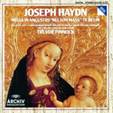 This recording has been around so long and praised
so highly that, at this late date, there’s little to add except
to make a very strong recommendation and to say that the download
is very little, if any, inferior to the CD. The ‘Nelson’ Mass
is, perhaps, the marginally weak link in the Chandos/Hickox set
of the Haydn Masses, so this version makes an excellent supplement
to that set. This is still one of the highlights of the Haydn
discography; if you buy only one Haydn recording in this, his
anniversary year, make this it, on CD or download – unless, of
course, you already own it.
This recording has been around so long and praised
so highly that, at this late date, there’s little to add except
to make a very strong recommendation and to say that the download
is very little, if any, inferior to the CD. The ‘Nelson’ Mass
is, perhaps, the marginally weak link in the Chandos/Hickox set
of the Haydn Masses, so this version makes an excellent supplement
to that set. This is still one of the highlights of the Haydn
discography; if you buy only one Haydn recording in this, his
anniversary year, make this it, on CD or download – unless, of
course, you already own it. 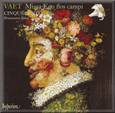 I thought this
new Hyperion recording so good that I’ve reviewed it in some detail
on the main Musicweb pages – please follow the link to that
I thought this
new Hyperion recording so good that I’ve reviewed it in some detail
on the main Musicweb pages – please follow the link to that 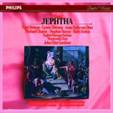 When reviewing the recent Carus recording of this oratorio,
directed by Matthias Grünert (83.422), I found myself wondering
why I wasn’t reacting more positively to a performance with everything
in place - except the heavily accented English pronunciation -
which nevertheless just didn’t gel. I found the answer in this
download – apparently the only way currently to obtain Gardiner’s
splendid live performance of this one work, otherwise available
in a 9-CD set. Here you’ll find all the ingredients that are
lacking in the Carus performance; it ‘sold’ me a work that I had
not rated among Handel’s best. The 320k transfer is good; it’s
quite a bargain, too, at £15.99.
When reviewing the recent Carus recording of this oratorio,
directed by Matthias Grünert (83.422), I found myself wondering
why I wasn’t reacting more positively to a performance with everything
in place - except the heavily accented English pronunciation -
which nevertheless just didn’t gel. I found the answer in this
download – apparently the only way currently to obtain Gardiner’s
splendid live performance of this one work, otherwise available
in a 9-CD set. Here you’ll find all the ingredients that are
lacking in the Carus performance; it ‘sold’ me a work that I had
not rated among Handel’s best. The 320k transfer is good; it’s
quite a bargain, too, at £15.99. 
 This has to be
a close runner-up to the Cozzolani recording as Discovery of the
Month. I would have preferred to have had the Mad Songs first
– they’re something of an anti-climax after the major work. Otherwise,
strongly recommended; it’s Chandos’s worthy Recording of the Month
and I think it will be in my player frequently. It neatly supplements
Chados’s excellent recent version of Dido and Æneas; Eccles
may not be in Purcell’s class but his music is very attractive
and it’s good to see Purcell placed in context with his contemporaries.
The lossless (wav) download is first class.
This has to be
a close runner-up to the Cozzolani recording as Discovery of the
Month. I would have preferred to have had the Mad Songs first
– they’re something of an anti-climax after the major work. Otherwise,
strongly recommended; it’s Chandos’s worthy Recording of the Month
and I think it will be in my player frequently. It neatly supplements
Chados’s excellent recent version of Dido and Æneas; Eccles
may not be in Purcell’s class but his music is very attractive
and it’s good to see Purcell placed in context with his contemporaries.
The lossless (wav) download is first class. 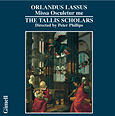 Two
excellent recordings of music by Lassus, from both of which I
derived great pleasure. The Harmonia Mundi coupling with Ashewell
is particularly attractive and neatly complements – indeed, surpasses
– the Christ Church recording of the latter’s music which I recently
recommended. Listening again to music by the man who may have
been Taverner’s teacher and predecessor at Cardinal College, I
think I judged him a little harshly when I
Two
excellent recordings of music by Lassus, from both of which I
derived great pleasure. The Harmonia Mundi coupling with Ashewell
is particularly attractive and neatly complements – indeed, surpasses
– the Christ Church recording of the latter’s music which I recently
recommended. Listening again to music by the man who may have
been Taverner’s teacher and predecessor at Cardinal College, I
think I judged him a little harshly when I 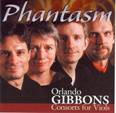 There’s very
little of value that I can add to the praise which has been heaped
on this award-winning recording, so I refer you to Johan van Veen’s
comprehensive
There’s very
little of value that I can add to the praise which has been heaped
on this award-winning recording, so I refer you to Johan van Veen’s
comprehensive 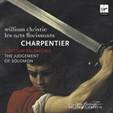 As with The Tallis Scholars, the mere
name of Les Arts Florissants is almost a guarantee of quality
and so it proves here on these two recordings of French baroque
music. These are first-rate accounts of very attractive music.
Charpentier is the better-known of these composers but the Campra
is also well worth investigating. Both recordings are very good
but, sadly, the Campra is marred by a disfiguring dropout on track
2. Buying that track elsewhere won’t help – the iTunes version
has the identical fault which must, therefore, presumably be laid
at the door of EMI/Virgin. Both providers refunded my money,
but you might like to come back to this one in a few months when,
with any luck, the fault will have been repaired.
As with The Tallis Scholars, the mere
name of Les Arts Florissants is almost a guarantee of quality
and so it proves here on these two recordings of French baroque
music. These are first-rate accounts of very attractive music.
Charpentier is the better-known of these composers but the Campra
is also well worth investigating. Both recordings are very good
but, sadly, the Campra is marred by a disfiguring dropout on track
2. Buying that track elsewhere won’t help – the iTunes version
has the identical fault which must, therefore, presumably be laid
at the door of EMI/Virgin. Both providers refunded my money,
but you might like to come back to this one in a few months when,
with any luck, the fault will have been repaired. 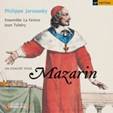
![Handel: 5 Organ Concertos [Germany]](download_roundup_files/image010.jpg) If you followed my advice and bought
Ton Koopman’s super-budget-price version of Handel’s Op.4 and
Op.7 Organ Concertos – see the end of my
If you followed my advice and bought
Ton Koopman’s super-budget-price version of Handel’s Op.4 and
Op.7 Organ Concertos – see the end of my 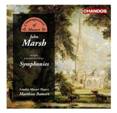 The Olympia CD
of five symphonies by this contemporary of Haydn and Mozart (OCD400)
has recently been reissued by Alto – happily, that super-budget
CD overlaps with the Chandos recording only partly, with the Sixth
Symphony and Conversation Symphony in common. The Chichester
Concert/Ian Graham-Jones play very well on that earlier recording;
though they’re not, of course, as professional a group as the London
Mozart Players, their performances are a little more forthright
than the LMP’s, though in the two works common to both recordings
Bamert’s timings are slightly faster than those of Graham-Jones.
The Chandos recording is first-rate and the lossless transfer reflects
that fact.
The Olympia CD
of five symphonies by this contemporary of Haydn and Mozart (OCD400)
has recently been reissued by Alto – happily, that super-budget
CD overlaps with the Chandos recording only partly, with the Sixth
Symphony and Conversation Symphony in common. The Chichester
Concert/Ian Graham-Jones play very well on that earlier recording;
though they’re not, of course, as professional a group as the London
Mozart Players, their performances are a little more forthright
than the LMP’s, though in the two works common to both recordings
Bamert’s timings are slightly faster than those of Graham-Jones.
The Chandos recording is first-rate and the lossless transfer reflects
that fact. 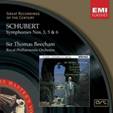 This is another back-catalogue item which
has never been surpassed and probably never will be – and the
reproduction of the original sleeve, with Beecham wearing that
awful suit is really nostalgia-inducing. The recording is a
little dated now but passionato’s transfer does it full justice.
Beecham always had the knack of making anything that he put
his hand to sound great; here he makes these early symphonies
sound like masterpieces, with the ‘little’ C major (No.6) almost
sounding the equal of the ‘great’ symphony in the same key (No.9
or No.7 depending on whether you follow the English or German
numbering). The mp3 is good value at £7.99 but the flac version
at £9.99 is less so, when the parent CD can be obtained for
less. Like most other download providers, passionato need to
look seriously at their policy of charging the same inflexible
price for full- medium- and budget-price issues.
This is another back-catalogue item which
has never been surpassed and probably never will be – and the
reproduction of the original sleeve, with Beecham wearing that
awful suit is really nostalgia-inducing. The recording is a
little dated now but passionato’s transfer does it full justice.
Beecham always had the knack of making anything that he put
his hand to sound great; here he makes these early symphonies
sound like masterpieces, with the ‘little’ C major (No.6) almost
sounding the equal of the ‘great’ symphony in the same key (No.9
or No.7 depending on whether you follow the English or German
numbering). The mp3 is good value at £7.99 but the flac version
at £9.99 is less so, when the parent CD can be obtained for
less. Like most other download providers, passionato need to
look seriously at their policy of charging the same inflexible
price for full- medium- and budget-price issues. 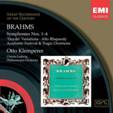 This could so easily
have become not just Bargain of the Month but the Bargain of Bargains
– 3 CDs’ worth of Klemperer’s sure touch in Brahms for just £3.
Surprisingly, Amazon also have precisely the same 3-disc set as
a download for more than six times the price. Unfortunately there
is a flaw: a sizeable and disfiguring dropout in the first track
of the first CD, the theme of the ‘Haydn’ Variations.
Amazon very quickly and very courteously acknowledged my email
about this and refunded my payment in full. For the moment the
£3 album appears to have been withdrawn from the amazon site.
It may well be that they are able to rectify the problem in the
near future, in which case the recording will be restored for
sale.
This could so easily
have become not just Bargain of the Month but the Bargain of Bargains
– 3 CDs’ worth of Klemperer’s sure touch in Brahms for just £3.
Surprisingly, Amazon also have precisely the same 3-disc set as
a download for more than six times the price. Unfortunately there
is a flaw: a sizeable and disfiguring dropout in the first track
of the first CD, the theme of the ‘Haydn’ Variations.
Amazon very quickly and very courteously acknowledged my email
about this and refunded my payment in full. For the moment the
£3 album appears to have been withdrawn from the amazon site.
It may well be that they are able to rectify the problem in the
near future, in which case the recording will be restored for
sale. 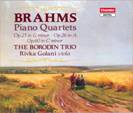 I recently recommended
the Nash Ensemble’s recording of the first and third quartets,
both very attractive works, but you really need the symphonic-length
second to complete the series and this Chandos recording fits
the bill. Tempi are on the broad side by comparison with the
Nash players in the first and third quartets and by a considerable
margin by comparison with the Ames Piano Quartet on Dorian in
the second. In any case, the eMusic download of the Dorian version
apparently has a track defect in the slow movement – at least,
a comment posted to that effect by a customer has been allowed
to stand, so I presume that the fault hasn’t been corrected.
I recently recommended
the Nash Ensemble’s recording of the first and third quartets,
both very attractive works, but you really need the symphonic-length
second to complete the series and this Chandos recording fits
the bill. Tempi are on the broad side by comparison with the
Nash players in the first and third quartets and by a considerable
margin by comparison with the Ames Piano Quartet on Dorian in
the second. In any case, the eMusic download of the Dorian version
apparently has a track defect in the slow movement – at least,
a comment posted to that effect by a customer has been allowed
to stand, so I presume that the fault hasn’t been corrected. 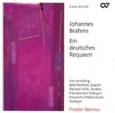 Following my recent
comparative disappointment in reviewing the 4-CD Eloquence set
of Brahms referred to above, I decided to look at some of the
download versions of the German Requiem. I used to think
that I didn’t really warm to the work, but the problem really
is that no one version has ever satisfied me; I like the quiet
introspection of one version and the power of another, but the
two never seem to come ideally together. Combine the qualities
of these two versions and you’d have a real winner.
Following my recent
comparative disappointment in reviewing the 4-CD Eloquence set
of Brahms referred to above, I decided to look at some of the
download versions of the German Requiem. I used to think
that I didn’t really warm to the work, but the problem really
is that no one version has ever satisfied me; I like the quiet
introspection of one version and the power of another, but the
two never seem to come ideally together. Combine the qualities
of these two versions and you’d have a real winner. 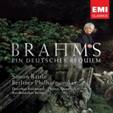 Rattle, in Denn alles
Fleisch, actually takes slightly longer than Bernius
(14:14 as against 13:07); as you might expect, therefore, his
version has greater weight but it also makes a more powerful impact
at the big moments. If you can bear the intrusive advertising
at the beginning of each track, this version is free to stream
from We7, or it can be downloaded from them, free of ads, for
£6.75. Overall, I agree with Jonathan Woolf, who thought this
version powerful and intense, but felt that Quasthoff’s singing
let the side down somewhat – see
Rattle, in Denn alles
Fleisch, actually takes slightly longer than Bernius
(14:14 as against 13:07); as you might expect, therefore, his
version has greater weight but it also makes a more powerful impact
at the big moments. If you can bear the intrusive advertising
at the beginning of each track, this version is free to stream
from We7, or it can be downloaded from them, free of ads, for
£6.75. Overall, I agree with Jonathan Woolf, who thought this
version powerful and intense, but felt that Quasthoff’s singing
let the side down somewhat – see 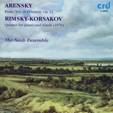
 This new recording
has a fair claim to be the best current version of the Janáček
quartets and the Martinů coupling adds to its attractiveness,
especially as the fiftieth anniversary of the death of its composer
is in danger of being eclipsed by the four luminaries who are
being celebrated this year. The performances integrate the power
of the music with beautiful playing. I never found the result
too smooth, though some may prefer the music to have slightly
rougher edges. With excellent recording, transferred in very
acceptable mp3 sound, this is strongly recommended.
This new recording
has a fair claim to be the best current version of the Janáček
quartets and the Martinů coupling adds to its attractiveness,
especially as the fiftieth anniversary of the death of its composer
is in danger of being eclipsed by the four luminaries who are
being celebrated this year. The performances integrate the power
of the music with beautiful playing. I never found the result
too smooth, though some may prefer the music to have slightly
rougher edges. With excellent recording, transferred in very
acceptable mp3 sound, this is strongly recommended. 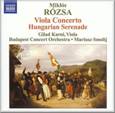 If you want to
hear what Rózsa’s music sounded like pre-Hollywood, you could
do much worse than this recording – see Steve Arloff’s
If you want to
hear what Rózsa’s music sounded like pre-Hollywood, you could
do much worse than this recording – see Steve Arloff’s 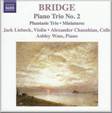 John France’s generally
positive
John France’s generally
positive 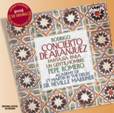
 I used this recording
recently as my benchmark comparison for Delphian’s fourth and
final volume in their complete series of Messiaen’s organ works
(DCD34078, 2 CDs), since it contains almost exactly the same works
as CD2 of that set. Good as is Timothy Byram-Wigfield’s playing
there, I found these Decca performances superior in almost every
respect. The Windsor organ on Delphian suits the music well;
the Douai organ here fits it like a glove. Very acceptable 320k
mp3 sound.
I used this recording
recently as my benchmark comparison for Delphian’s fourth and
final volume in their complete series of Messiaen’s organ works
(DCD34078, 2 CDs), since it contains almost exactly the same works
as CD2 of that set. Good as is Timothy Byram-Wigfield’s playing
there, I found these Decca performances superior in almost every
respect. The Windsor organ on Delphian suits the music well;
the Douai organ here fits it like a glove. Very acceptable 320k
mp3 sound. 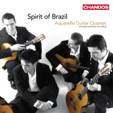 If Julian Bream
and John Williams are twice as good on their Together and
Together Again albums (2 CDs, RCA 74321 201342),
does that make a guitar quartet four times as good? Not necessarily,
although, on the evidence of this recording, the Aquarelle String
Quartet are an accomplished and entertaining group. The music,
all but two tracks by contemporary composers, is all enjoyable
though hardly memorable. It’s those two tracks, attractive and
skilful adaptations of the music of Villa-Lobos (tracks 2-3) that
really stick in the mind; it’s a shame that they didn’t produce
a whole CD of Villa-Lobos. It’s all well recorded and sounds
excellent in the lossless transfer, but I’m not as impressed as
some of the reviews that I’ve seen had led me to expect.
If Julian Bream
and John Williams are twice as good on their Together and
Together Again albums (2 CDs, RCA 74321 201342),
does that make a guitar quartet four times as good? Not necessarily,
although, on the evidence of this recording, the Aquarelle String
Quartet are an accomplished and entertaining group. The music,
all but two tracks by contemporary composers, is all enjoyable
though hardly memorable. It’s those two tracks, attractive and
skilful adaptations of the music of Villa-Lobos (tracks 2-3) that
really stick in the mind; it’s a shame that they didn’t produce
a whole CD of Villa-Lobos. It’s all well recorded and sounds
excellent in the lossless transfer, but I’m not as impressed as
some of the reviews that I’ve seen had led me to expect. 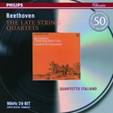 Finally, a partial redemption
of my promise, made last month, to survey the available versions
of BEETHOVEN Late Quartets.
To the versions by the Lindsays and the Borodin Quartet which
I recommended then, let me add equally desirable versions from
the Quartetto Italiano on a 3-CD set available from
Finally, a partial redemption
of my promise, made last month, to survey the available versions
of BEETHOVEN Late Quartets.
To the versions by the Lindsays and the Borodin Quartet which
I recommended then, let me add equally desirable versions from
the Quartetto Italiano on a 3-CD set available from 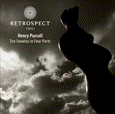 I’ve just been
listening to Retrospect Trio’s new recording of Henry
PURCELL Ten Sonatas in Four Parts (Linn CKD332),
due for release in early May but available in advance to download
from
I’ve just been
listening to Retrospect Trio’s new recording of Henry
PURCELL Ten Sonatas in Four Parts (Linn CKD332),
due for release in early May but available in advance to download
from