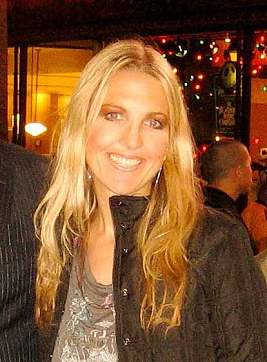
Gary Dalkin: You wrote your first symphony
aged 12, so presumably you've known you were going to be a composer
from a very young age. What is your musical background and training?
Jane Antonia Cornish: I grew up in a very
musical environment. My parents had classical music playing most of the
time when I was a kid, which really inspired me. I took violin and
piano lessons from a young age, and adored playing so much that I would
practice for hours. I also composed music from as young as I can
remember. One of my orchestral pieces was being performed in a concert
when I was around 11 years old, which was attended by a well-regarded
classical composer, Peter Naylor. He suggested I take lessons from him,
which I did right up to 18 years old. He taught me harmony,
counterpoint and techniques used by a wide range of composers, and he
also guided me with my own compositions.
As a teen, I immersed myself in music-I was a finalist in the BBC Young
Composer of the Year competition, performed as a solo violinist with
orchestras, and was in the National Youth Orchestra of Great Britain,
performing in superb venues such as the Royal Albert Hall. I was pretty
certain I wanted to be a solo violinist at this time, and would
practice all day every day. I won a scholarship to the Royal Northern
College of Music at 18 years old, studying violin with the violin
virtuoso Yossi Zivoni and composition with Dr. Anthony Gilbert, a
highly respected composer and professor. One summer during my studies
there, I attended the Dartington Summer School, and studied film
scoring. We would analyse great movie scores each day, one of them
being Toru Takemitsu's score for Ran. I was so moved by his
music, that I decided that film music was what I wanted to pursue.
After the RNCM I went to the Royal College of Music in London to get my
masters degree, and shortly after that moved to Los Angeles to pursue
my career.
GD: What sort of plan did you have in
moving to LA? Was it a leap of faith? Did you have contacts already
established, or some work lined up? In short, how does a young aspiring
British composer break into the film music world in Hollywood?
JAC: Yes, moving to LA was definitely a
leap of faith. After finishing my studies at the Royal College of
Music, I worked on some indie films and commercials, but there didn’t
seem to be the opportunity to write the type of big orchestral music I
love to write. My mum initially suggested I move here. During a walk on
a beach in Scotland where my parents live, I was expressing my interest
in LA. She just said, ‘Well, move there. Your lease on your apartment
runs out soon, so pack up your stuff and go then. If you don’t like it,
move back! There will be nothing lost!’
I spent 10 days in Santa Monica at first to check it out, and fell in
love with it. During this vacation, I had meetings with agents and
composers to establish some contacts, and managed to secure some
employment for my move a couple of months later. I don’t think there is
a formula to breaking into the film music world in Hollywood. We all
have our own path. Some composers start out as assistants to film
composers, which can be very rewarding. You can gain valuable
experience this way, and often have the opportunity to write cues on
major TV shows and movies. Other composers establish relationships with
directors from early on in their career, who go on to be very
successful.
GD: You worked as an orchestrator on a few
films, including Alex and Emma. This is an area where your
serious classical training must have been invaluable. Have you found
the orchestral craft behind traditional film scoring is still well
respected Hollywood, given many films now tend towards pop and/or
electronic scoring? I ask because you mention how in Britain there
isn’t much opportunity to write big orchestral music, and I wonder how
much of this is a matter of budget and how much a matter of taste (or
lack therefore!) on the part of contemporary film-makers?
JAC: There is still a call for orchestral
scores today, and from what I've seen, I believe there is still a
respect for the traditional orchestral craft. Many movies now have
electronic scores, and it's not uncommon to combine electronic elements
with live orchestra, for example in the recent movie Batman Begins.
It's also a trend right now to alternate between orchestral score and
songs.
As I mentioned, there is more opportunity for me to write the type of
orchestral music I love to compose in Los Angeles for various reasons.
Budget is without doubt a factor-you can't record a large orchestra and
choir in LA without a substantial budget put aside for music. There are
more movies made in the US with larger budgets, and with the continuing
desire for bigger and better special effects in commercial films,
powerful orchestral music is often sought after by the director to
enhance the dramatic elements of the film.
GD: You must have found it a little ironic
that having moved to LA your first major score turns out to be for a
British film. How did you come to score Five Children and It?
JAC: Five Children and It was
produced by both UK and US companies. I became involved in the project
through a music producer friend, who has a studio at Henson here in Los
Angeles. He mentioned that they were making this wonderful children's
fantasy film, and were looking for a composer. I submitted my music to
a producer here in the US and the director, John Stephenson.
Fortunately, it was just what John was looking for. This lead to a
fantastic collaboration. It was a great experience working with such an
insightful director who shared my musical thoughts in relation to the
film.
GD: How closely did you work with John
Stephenson? Did he have very clear ideas of what he wanted for the film
before he heard your music? Did he give you specific direction in terms
of themes, style, particular instruments he wanted you to feature? Did
you ‘spot’ the film together, or had he already decided where the music
should go?
JAC: John and I spotted the film at my
studio in LA. We watched the movie from the very beginning, and agreed
on where the music should come in and out. I had already written the
main theme for the movie, so we established when it should appear. The
main theme tends to feature in the highly emotional moments, such as
the flying scene and the return of the children's father. John also
requested that it appear at the beginning of the film, to set the tone
right from the start.
We also focused on establishing where the rest of the thematic material
would feature. Uncle Albert and Martha needed a crazy theme, Horace's
dungeon needed a dark atmospheric theme, and so on. John didn't express
any preferences when it came to instrumentation-he just requested an
epic orchestral score. We discussed emotions and textures within each
scene, and the moments which could be enhanced by the music. I composed
the score, based on the notes made during our spotting session, in Los
Angeles, while John was based in London. Each day I posted my audio
files onto his FTP server with the exact start times of each cue,
allowing him to line the cues up to the movie. It was a fantastic
collaboration, as we both agreed on virtually everything musically,
which resulted in a very enjoyable creative experience.
GD: Having heard the score now I can
certainly say that it is as you describe an epic orchestral score, very
much in the Hollywood mainstream, perhaps for sake of reference
somewhere in the tradition of John Williams’ more family orientated
films such as Hook, Home Alone and Harry Potter. The
melodies are bold, strong and emotional and the orchestrations are very
colourful and rich. I enjoyed listening to it very much, and imagine
many film music fans would as well, so I have to ask, is there any
chance of a commercial album being released? What are the
considerations when it comes to releasing a soundtrack album at the
moment?
JAC: Thank you for those lovely
comparisons! Unfortunately, there are no plans at present to release
the soundtrack commercially. Though the film was a hit in the UK and
Europe, it only got a DVD release in the states. The soundtrack labels
weren't as interested, because it didn't have a wide US theatrical
release, even though they liked the music very much.
Films promote soundtracks, but DVD releases don't - so even though
there are more and better films coming direct to DVD, like sequels to
some of the big Disney animated films, record labels are still very
cautious about releasing the soundtracks. I hope that digital
distribution, like iTunes, will help solve that problem by making it
less expensive to put out a title.
GD: Given that you say you and the
direction John Stephenson agreed on virtually everything, and having
only heard this score of yours I’m wondering how close the music is to
your own personal style of composition? Obviously a film score is
dictated by the style and demands of the film on screen, but is this
big, romantic, magically glittering sort of music something you would
write for yourself? Indeed, do you have the time and inclination to
write music for yourself or the concert hall at the moment, and if so
how would you describe your personal style
JAC: I wrote the music for Five
Children and It in response to the characters, the emotional
content and the detail in each scene. My concert music for orchestra
doesn't have these restrictions, so I enjoy creating sounds and images
in a much more adventurous way. My concert music is mostly atonal, and
follows no rules or organised patterns or structures. My aim when
composing music is to create sounds which move the listener
emotionally. I love to create orchestral colours, evoke strong images
and generate a reaction in the listener. This applies to both my
concert and film music, despite their stylistic differences. I don't
have a lot of time to write music other than for film at the moment, so
I have a number of unfinished sketches from the last 12 months. I
definitely see my composing career expanding in the future into live
works as well as film music.
GD: Do you have any new projects that you
can talk about? Any new film or TV scores coming up?
JAC: My next feature project is for Lars
von Trier's Zentropa. It's a dark magical
fantasy/action/thriller called Island of the Lost Souls,
directed by Nikolaj Arcel. I am very excited to be a part of this film.
I'll be writing for orchestra, and the music will be much darker than
Five Children and It, with ethereal, atmospheric colours and
strong thematic material. I'll be recording it in London, which is a
fantastic opportunity.
Gary Dalkin