Doubtless Gould’s admirers will think very differently
but it’s been something of a dispiriting experience listening to his
Brahms. He’d apparently never even played through the Ballades until
these, amongst his final recordings, made in 1982 and which were released
posthumously. I’ve followed the somewhat confusing details in the notes
for dating the Intermezzi; for once in this series, usually impeccable,
Sony has omitted recording details.
The process of assimilation by which Gould came to
learn the Ballades is rehashed in the oh-so-whimsical Platonic dialogue
constructed by Michael Stegemann as his notes to this issue that partly
derive from Gould’s interviews and writings. Whether Gould had indeed
internalised the Ballades is a moot point but I’m afraid I shall have
to pass over them quickly; they are discursive, etiolated and distended,
undifferentiated and fractured.
As for the Intermezzi, a grouping of ten, amongst which
can be found some of Brahms’ most overtly intimate music I have broadly
similar conclusions. The E flat major is very slow with no relaxation
into the piu adagio central section, ironing out contrast. The B flat
minor is directionless with muted dynamics and once more painfully and
point-makingly slow. I can’t locate any sense of con molto espressione
as indicated and the performance of this and other Intermezzi is the
more astonishing in the light of Gould’s reported comments on the "aristocracy"
of his playing here (unless he equated aristocracy with coldness and
indifference). It’s true that there are hints of a deeper Gould – the
C sharp minor Op. 117/3 is a case in point and he rises to something
of a passionate climax in the E flat minor but this is vitiated by a
ponderous tempo. The E major from Op. 116 is not especially slow but
it doesn’t need to be when the sense of generic facelessness is so pervasive.
Clearly Gould sees the Op. 76 No 6 in A major more in terms of con
moto than Andante con moto as marked. Its perversely hectic
drive is to me mere point making abstruseness. He simply doesn’t shape
these pieces with any sense of conviction, instead reducing them to
opacity and formlessness. Count me out.
Jonathan Woolf
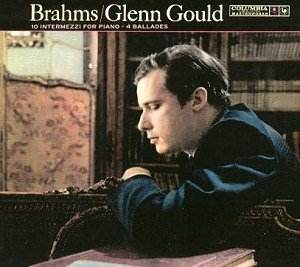
 Glenn Gould (piano)